East Karawang as an Industrial Hub
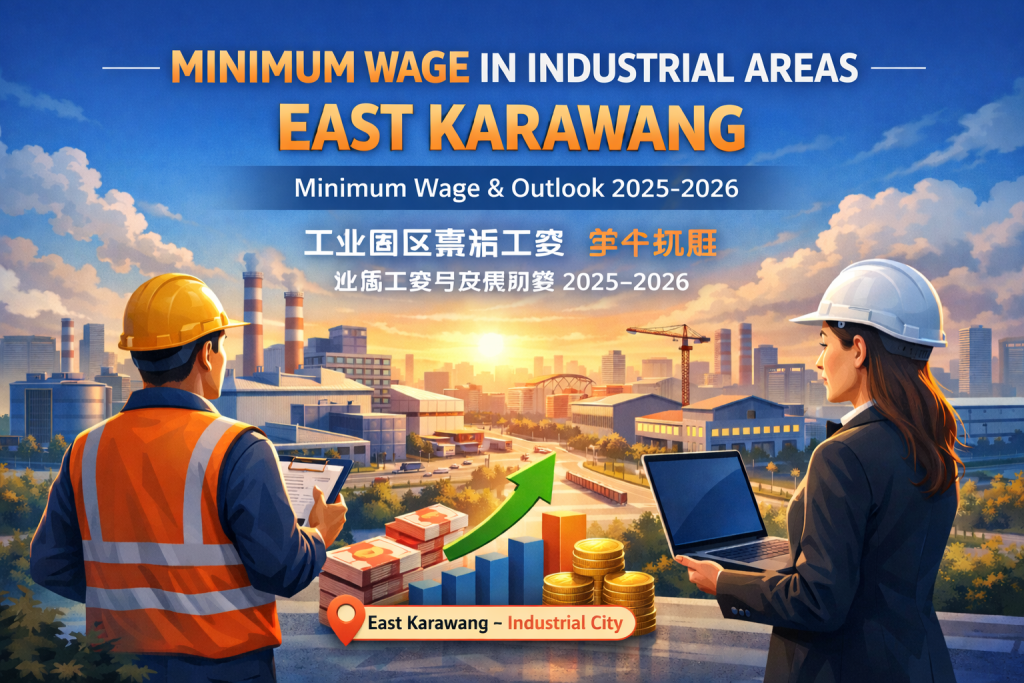
East Karawang is part of Karawang Regency, one of the largest industrial centers in West Java and Indonesia. The area is widely known as home to dozens of factories across the automotive, electronics, textile, logistics, and other manufacturing sectors. Due to the high demand for industrial labor, minimum wage levels in this region have become a key topic for workers, employers, and policymakers.
UMR (Regional Minimum Wage) and UMK (Regency/City Minimum Wage) are government-regulated wage standards determined based on recommendations from the Regional Wage Council and officially approved by the Governor. These minimum wages serve as the mandatory wage floor that companies must comply with.
Karawang Minimum Wage (UMK) – 2025
In 2025, the West Java Provincial Government officially established minimum wages for all regencies and cities, including Karawang Regency.
-
Karawang Regency UMK 2025: IDR 5,599,593.21
This figure places Karawang as the second-highest minimum wage in West Java, after Bekasi City.
The increase represents an adjustment from the previous year, with growth of approximately 6.5% compared to the 2024 UMK.
Legal Basis for UMK 2025
The 2025 minimum wage determination is based on:
a. Minister of Manpower Regulation No. 16 of 2024 on Wages
b. Governor of West Java Decree No. 561.7/Kep.798-Kesra/2024 on the 2025 Minimum Wage
The UMK took effect on 1 January 2025 and applies to all companies operating in Karawang, including major industrial zones such as KIIC, EJIP, and Delta Silicon.
Comparison of UMK 2025 — West Java
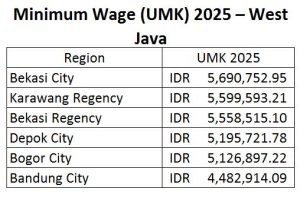
Karawang ranks near the top of the West Java minimum wage list, significantly higher than the average UMK in coastal and southern regions of the province.
Projected Karawang UMK 2026
For 2026, based on the latest official announcements from the Governor of West Java:
-
Projected Karawang UMK 2026: approximately IDR 5,886,853
This projection would place Karawang among the top three highest minimum wages in West Java, pending final official approval.
The projected increase follows the annual minimum wage trend, which considers inflation, decent living needs, and regional economic growth.
Key Factors Determining UMK Levels
UMK is determined based on several main factors:
-
Regional economic growth, particularly purchasing power and industrial expansion
-
Inflation and decent living standards for workers
-
Industrial compensation through productivity and investment
-
Central and provincial government policies, along with Wage Council recommendations
Why Is Karawang’s UMK Relatively High?
-
Proximity to Jakarta and the Greater Jakarta metropolitan area makes Karawang a major industrial investment hub
-
Many large companies choose Karawang as their production and distribution base
-
Competition for skilled labor drives higher wage standards
-
Multidirectional economic effects from industrial activities raise overall living standards
As a result, Karawang’s UMK is often used as a regional wage benchmark in Indonesia.